Representation Changes When Heroes Get More to Do
A first appearance can become a landmark, but the longer history of gender representation in superhero comics is also a history of opportunity: who receives a continuing title, who leads a team, whose ordinary relationships matter, and who returns after the celebratory announcement. Wonder Woman, Storm, Monica Rambeau, Oracle, Kamala Khan, Dreamer, and other heroes changed different parts of that landscape. Their contributions cannot be reduced to one uninterrupted march from exclusion to success. Publishing decisions, creative voices, formats, and changing interpretations all shape what an audience actually encounters. This explainer follows those dimensions rather than ranking identities or treating every milestone as the same achievement. The central question is how a character’s presence becomes a sustained ability to act, speak, and develop within the imaginative world of superhero comics.
A: Continued stories and meaningful decisions show what opportunity follows the introduction.
A: Team authority changes who defines shared goals within a prominent part of superhero publishing.
A: Barbara's disability history shows why different aspects of a person's representation need attention together.
A: Professional obligations widen the situations in which a heroine can exercise judgment.
A: Her family, community, and ordinary relationships matter because they affect the actual story.
A: The text can establish an identity rather than requiring an audience to derive it from a fantastic mechanism.
A: It demonstrates narrative opportunity beyond the character's anthology debut.
A: The format can offer a concentrated introduction through bookstore and library reading routes.
A: It adds one opportunity; continued characterization and publication still matter.
A: Influence and uneven treatment can coexist within a long publishing history.
Presence, Authority, and Continuity Are Different Achievements
A comic can include a woman or a transgender character without allowing that person to make a consequential decision. Presence is the first question, but authority adds another: whose perspective organizes the story, who solves problems, and who defines what the conflict means? Those distinctions help explain why two superficially similar appearances can offer very different experiences to readers.
Continuity of opportunity matters as well. A character introduced with enthusiasm can disappear, remain confined to special issues, or receive too little development to establish a recognizable life. A sustained role permits friendships, mistakes, recovery, humor, and change. Representation becomes more substantial when a figure can accumulate experience rather than repeatedly arrive as a new announcement.
Wonder Woman Makes a Female Hero the Main Attraction
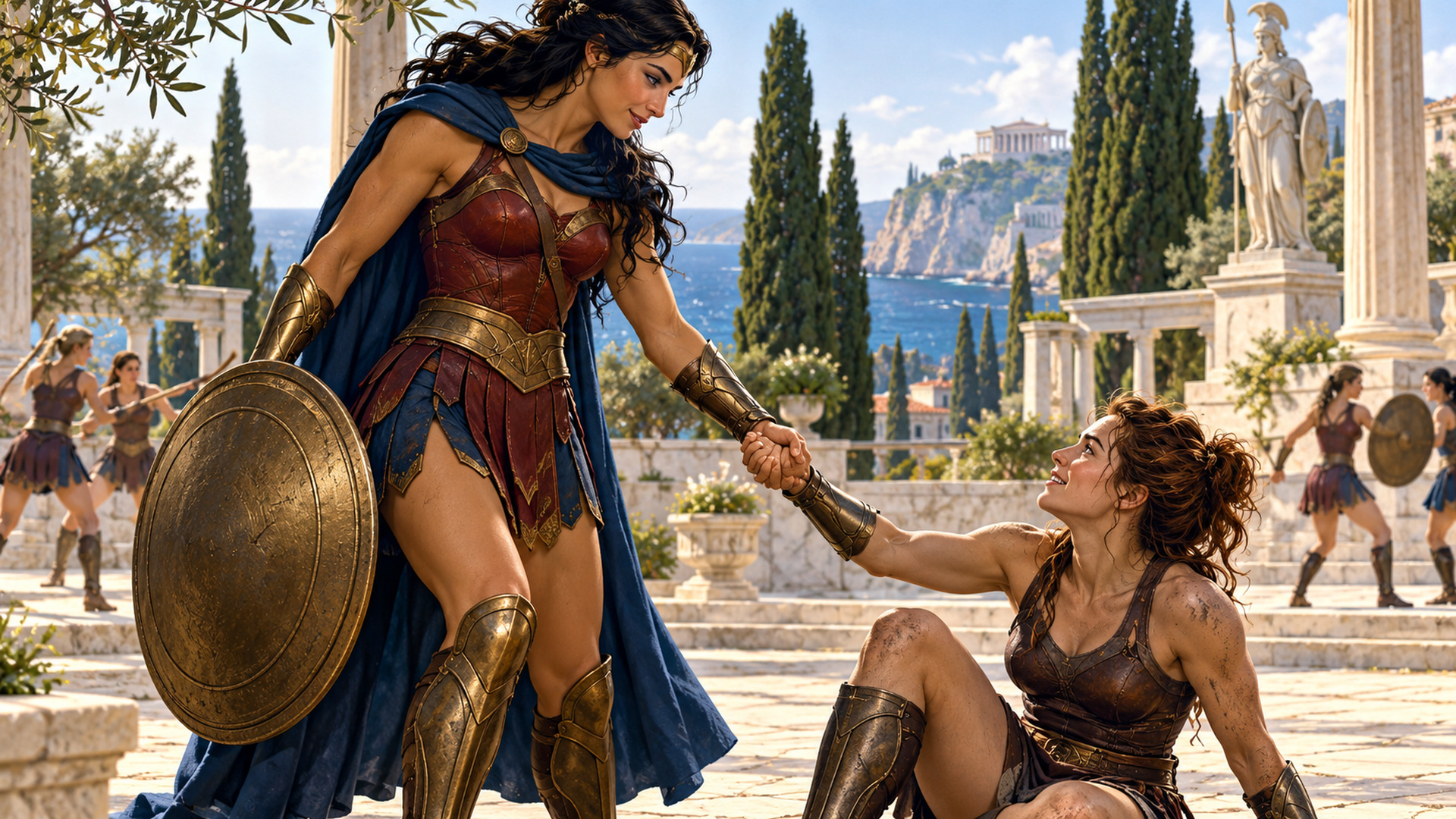
Wonder Woman’s arrival in All-Star Comics #8 and her early starring adventures established a durable female center within superhero publishing. Her significance is not simply that a woman possesses unusual strength. Diana brings an upbringing and a set of convictions into a wider world, creating stories in which a woman’s interpretation of conflict has public importance. The long life of the character then makes her available to competing creative approaches, including portrayals that do not always fulfill the promise readers find in the premise. That tension belongs in the history: lasting visibility creates opportunities for both meaningful development and limiting reinvention.
Team Leadership Changes Who Defines the Mission
Storm’s leadership within X-Men stories gives authority a continuing dramatic form. Weather effects may announce her power, but leadership appears through decisions about people, risks, and obligations. A Black woman does not merely contribute a useful ability to an otherwise settled hierarchy. She can determine how the group understands what it owes its members and the world.
The Avengers provide other revealing examples. Janet van Dyne’s Wasp and Monica Rambeau both hold leadership roles, demonstrating that a team associated with famous male figures can place women in positions of judgment. Their authority becomes most convincing when a story allows it to affect conduct, not merely when another character acknowledges a title in dialogue.
Marvel’s overview of women leaders identifies Monica’s nomination in Avengers #279. The broader significance is interpretive: command can change whose experience counts as the basis for collective action. A team book therefore becomes an important place to examine representation beyond the proportions of a roster.
Professional Lives Expand the Available Personalities
She-Hulk’s legal career gives Jennifer Walters problems that cannot be settled entirely through extraordinary strength. Professional obligations, public attention, and personal judgment make the heroic identity part of a larger life. That range helps challenge the idea that a powerful woman must be defined by a narrow list of exceptional traits.
Humor and ordinary frustration are significant here. A character who can be funny, impatient, competent, or wrong has more expressive room than one expected to demonstrate perfect symbolic strength at all times. Allowing that variety does not make representation less serious. It makes a continuing protagonist more capable of carrying different kinds of stories.
Oracle Shows Why Gender Cannot Be Examined in Isolation
Barbara Gordon’s Oracle identity makes disability part of the discussion about who can exercise heroic authority. Her information work, coordination, relationships, and judgment can shape an adventure without requiring every contribution to take the form of a conventional physical confrontation. Different continuities revise her circumstances, and those changes have consequences for readers who value her history as a wheelchair user. The example demonstrates why a broad claim about women in comics is not enough. Gender intersects with disability and other experiences, so a publishing change that expands one form of visibility may complicate or reduce another.
The Body Is Drawn, but the Person Must Be Written
Superhero comics make bodies highly visible, which creates both possibilities and limits. A changed costume or a different physique can challenge an established expectation, but visual novelty does not guarantee agency. The reader also needs to see whose intentions matter and whether the narrative understands the person beyond an impressive image.
Carol Danvers’ movement through different identities and Jane Foster’s period as Thor make these questions particularly useful. A famous heroic role can be interpreted through a woman’s established experience, while a transformation can produce personal costs rather than erase vulnerability. The mantle becomes a setting for decisions instead of a complete statement about what equality looks like.
Those stories need not be evaluated solely through comparison with a male predecessor. The more revealing issue is what the new protagonist gets to do: whether her relationships develop, whether her choices alter events, and whether the story allows her future to contain more than an argument about permission.
Kamala Khan Places a Different Household at the Center
Kamala Khan’s Ms. Marvel connects superhero aspiration with a particular family, faith, school life, and neighborhood. That specificity changes what the genre treats as ordinary. A household does not need to resemble an earlier hero’s household to supply humor, affection, frustration, or a meaningful conflict about responsibility.
Her example shows why representation involves more than adding a demographic description to a profile. The surrounding world needs attention too. Friends, relatives, community expectations, and everyday places can affect the decisions the hero makes. When those details matter to the action, difference becomes part of the storytelling rather than a label applied outside it.
Explicit Transgender Heroes Change What Must Remain Subtext
Characters such as Coagula, Dreamer, Galaxy, and Marvel’s Escapade make it possible to discuss transgender lives without relying solely on an ambiguous transformation metaphor. Their explicit identities matter, while their differences remain equally important. No single origin, body, personality, or genre can represent every transgender reader.
Escapade, introduced through Marvel’s Voices: Pride in 2022, illustrates another necessary step: continued adventures after an introduction. Marvel’s preview of her New Mutants story describes a developing relationship with the wider mutant setting. A character gains opportunities for action when the publication moves beyond the debut itself.
The historical account should preserve the scale of a claim. A first transgender superhero at one publisher is not automatically the first transgender character in all comics or the first across every medium. Precise labels recognize an achievement without erasing work that falls outside the most visible publishing line.
Dreamer Demonstrates Exchange Between Television and Comics
Nia Nal’s Dreamer begins with a notable television presence and moves into comics through work that includes Nicole Maines, who originated the screen role. The movement creates an exchange rather than a simple hierarchy in which one medium merely validates another. Viewers can arrive with an attachment to the character, while comic stories develop new relationships, visual possibilities, and continuity. Representation therefore has a media history as well as an issue history: audiences can meet a hero through different routes and bring different expectations to the same name.
The Supporting Cast Determines What Visibility Feels Like
A hero’s everyday surroundings can make an identity seem ordinary, exceptional, welcomed, or constantly under examination. Those effects come from other people as well as the protagonist. A friend who remembers a practical concern may establish belonging more effectively than a formal speech about acceptance.
This is one reason to examine scenes that appear to do little for a large action plot. A shared meal, a workplace disagreement, or a conversation about an unfinished task can give the character a social place. The encounter tells readers that this person has a life which continues when no public milestone is being announced. Such moments supply specificity that a profile description cannot provide on its own.
The supporting cast also needs agency. Relatives and friends become less convincing if they exist only to approve or reject the hero’s identity. Their own wants create more substantial relationships, allowing disagreement to concern practical values and competing needs. Representation then becomes part of an inhabited world, with people who affect one another beyond the symbolic function assigned to the central figure.
Graphic Novels Open Another Route to a Superhero Life
A bookstore or library graphic novel can give a character a concentrated story that does not require familiarity with decades of monthly continuity. Galaxy: The Prettiest Star and Bad Dream: A Dreamer Story show how identity, relationships, and a developing heroic role can be presented through that format. The reader has room to become attached before needing a map of a much larger universe.
Format does not guarantee quality or accessibility for everyone. It does change practical possibilities, including how a story is encountered and how much introductory context can be supplied in one work. A history focused only on the most famous ongoing superhero titles would miss that part of the development.
New Partnerships Can Move Beyond the Special Introduction
DC’s 2026 Justice League: Dream Girls project brings Dreamer and Galaxy into a shared, continuing superhero context. The significance is not that a single event completes the work of representation. It shows another available narrative position: transgender heroes can share a major adventure whose premise involves their powers, relationships, and decisions. They need not remain permanently separated into individual origin accounts. Keeping the publication date visible also prevents a contemporary example from being confused with the earlier appearances that made it possible.
Progress Is Uneven, and That Is Part of the Evidence
Representation does not improve automatically with each new publication year. Characters can lose a title, be rewritten narrowly, or remain absent while a publisher celebrates a newer milestone. A useful history looks at those interruptions alongside the moments most suited to an anniversary feature.
Authorship and editorial opportunity are also relevant. Writers, artists, colorists, letterers, and editors make decisions about viewpoint, appearance, language, and emphasis. A character’s identity cannot tell readers everything about those decisions, but examining the credited work helps make the history less abstract.
Finally, readers can disagree about an influential portrayal without denying that influence exists. A familiar character may be meaningful to someone who also recognizes the limitations of particular stories. That combination supports a more accurate conversation than requiring every example to be either a flawless achievement or a total failure.
Look for the Life That Continues After the Milestone
When assessing a superhero’s contribution, ask what happens after the defining first appearance or dramatic change of identity. Does the character receive another problem worth solving, a relationship worth developing, and a choice that changes the plot? Those questions reveal whether public recognition has become a practical storytelling opportunity.
The heroes discussed here changed different parts of that opportunity. Some expanded who could lead, some changed which households stood at the center, and others made previously marginal identities explicit. Their combined importance lies in making superhero worlds capable of supporting more particular lives, with room to develop beyond the moment they first become visible.