There Is More Than One Way to Challenge a Gender Convention
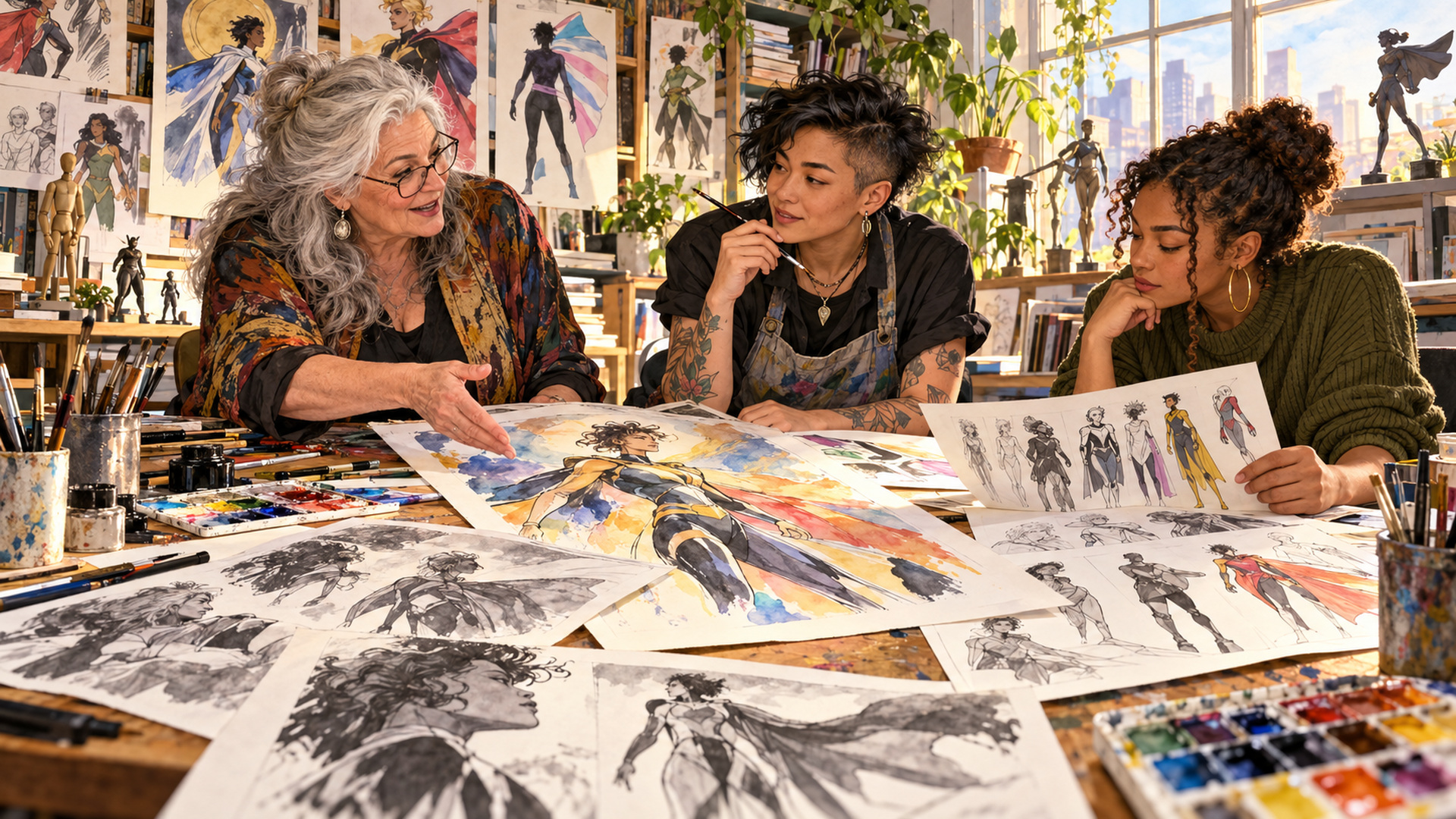
A woman leading a superhero team, a transgender girl discovering her voice, and a shapeshifter changing appearance do not tell the same story about gender. Comics can challenge conventions through identity, presentation, physical power, professional authority, or the simple decision to let a character occupy the center of an adventure. Treating those contributions as interchangeable makes the history harder to understand. This selection brings together influential characters whose stories expand different possibilities, from Wonder Woman and Storm to Coagula, Dreamer, and Galaxy. The word greatest describes an editorial judgment about imaginative reach and significance, not a contest over whose identity is most exceptional. The useful question is what assumption each character unsettles and whether the story allows a person to exist beyond that symbolic task. Their differences reveal how much more the medium can do than exchange one familiar costume for another.
A: No. Leadership expectations, gender expression, and explicit gender identity are different subjects.
A: Her continuing actions and authority can unsettle a convention without a speech explaining the effect.
A: A fantasy power alone does not establish the identity a particular story gives its bearer.
A: They help show a life and personality larger than physical capability alone.
A: DC identifies her as its first transgender superhero, a narrower claim than a universal first.
A: Her movement into comics shows how representation and characterization can develop across media.
A: It tells a particular character's experience through an alien premise rather than supplying a universal model.
A: They describe different aspects of a person's life and should be discussed separately.
A: Cultural significance does not make every interpretation equally successful.
A: Agency, relationships, specificity, and an ongoing range of experiences give a visible character a life.
Separate Identity, Expression, and Social Expectations
Gender identity concerns who a person understands themselves to be. Gender expression concerns presentation, while expectations about leadership, strength, beauty, or care are social conventions that can attach to gender. Sexual orientation is another subject again. These distinctions matter when discussing characters because an unconventional costume or a same-gender romance does not, by itself, establish a transgender or nonbinary identity.
Fantasy mechanics need the same care. A character who can alter their body is not automatically a representation of a particular real-world identity. Readers should attend to the relevant story’s explicit characterization and distinguish their interpretation from what the comic establishes. That approach makes comparison more precise without preventing readers from finding personal meaning in a fantastic premise.
Wonder Woman: Authority Was Part of the Premise
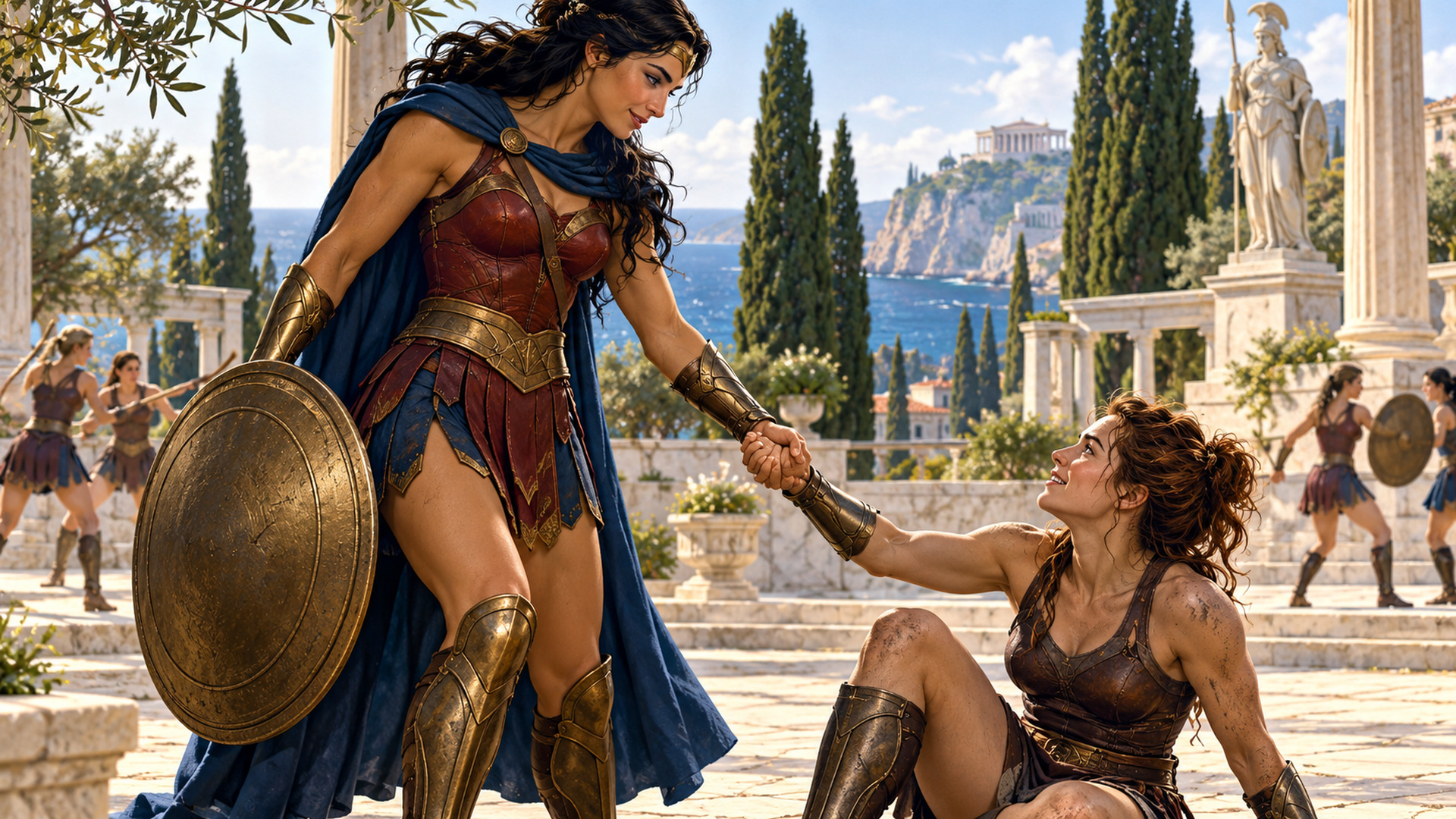
Wonder Woman challenged a narrow image of heroism by placing a powerful woman at the center of action and moral argument. Diana is not simply present to admire another hero’s accomplishments. Her upbringing and convictions give her reasons to question the world she enters, making strength and judgment part of the same public role.
The challenge is especially productive when compassion does not function as a reason to deny her authority. She can oppose violence, defend others, make difficult decisions, and remain formidable. The dramatic question becomes how those commitments interact under pressure, rather than whether a woman is allowed to possess them.
Her publishing history also contains contradictions. Different periods emphasize different aspects of the premise, and individual stories can reproduce conventions the larger concept appears to challenge. Recognizing that tension is more useful than treating cultural significance as proof that every portrayal is equally thoughtful.
Storm: Leadership Changes the Terms of Visibility
Ororo Munroe’s place in X-Men stories makes leadership, confidence, and responsibility central to a Black woman superhero’s presence. Weather powers provide spectacle, but authority becomes convincing through judgment, relationships, and the willingness to make choices that affect others. Her value to this discussion is not that one character can stand for all women or all Black readers. It is that a long-running role can let a woman lead through different emotional circumstances, occupying space as a decision-maker whose competence does not require her to become a supporting exception in someone else’s story.
She-Hulk: Strength Without One Required Personality
Jennifer Walters complicates expectations surrounding a powerful female body through a premise that has supported law, comedy, superhero action, and self-aware play with the comic page. She can be physically imposing while having a professional life and an expressive personality. The transformation does not need to reduce her to a single emotional register.
That flexibility matters because a supposedly strong woman can become another restrictive type if the story permits only severity or exceptional toughness. She-Hulk can enjoy aspects of her life, make mistakes, and negotiate public attention. The result is interesting when humor belongs to her agency instead of merely inviting the audience to dismiss her.
Big Barda: Formidable Power and an Ordinary Relationship
Big Barda makes an arresting contrast between immense physical capability and the possibility of building a life beyond the violent system that shaped her. Her size and strength need not disqualify her from affection, partnership, or ordinary domestic desires. The combination pushes against the assumption that formidable women must exist outside recognizable human attachments.
Her relationship with Mister Miracle becomes especially revealing when neither person’s value depends on preserving a conventional hierarchy of physical power. Their differences can generate comedy and tension without requiring the stronger partner to surrender capability. A relationship can be interesting because its members negotiate their lives rather than because they match a familiar visual arrangement.
The wider lesson is that a character does not need an explicit speech about gender to challenge an expectation. A sustained pattern of choices can do the work. Barda’s story offers a way to consider strength alongside tenderness and freedom, with neither category treated as a contradiction that must eventually be removed.
Mystique: Transformation Is Not a Complete Explanation
Mystique’s ability to change appearance gives comics a powerful visual tool for questioning how people recognize bodies and identities. The power makes supposedly stable surfaces unreliable, opening stories about disguise, control, intimacy, and the limits of appearances. It can make a familiar social category suddenly difficult to read.
That does not mean every use of the power offers the same argument about gender. Particular stories may emphasize espionage, family, bodily autonomy, or deception, and the framing matters. A thoughtful reading describes those uses specifically instead of treating a shapeshifting ability as a substitute for understanding how the character identifies in the relevant account.
Loki: Familiar Categories Meet a Changing Mythic Figure
Loki’s changing presentations across Marvel stories provide another reason to separate a fantastic capacity from the meaning a particular portrayal gives it. A mythic shapeshifter can inhabit different forms, but the story’s treatment of identity determines whether change is merely a tactical device or part of a more expansive characterization. Readers should specify the run or adaptation being discussed, since one version’s language does not automatically describe every earlier appearance. Loki is valuable here because the character makes rigid assumptions about form and identity difficult to maintain, while also showing why careful contextual reading remains necessary.
One Exceptional Figure Cannot Supply Every Missing Life
A single prominent character can open an important possibility while still being asked to carry too much. If that person is the only example of a gender experience in a large cast, every flaw or success may be interpreted as a claim about a much wider group. More characters can reduce that burden by making differences within the group visible. The world gains contrasting personalities, priorities, relationships, and responses to difficulty. Readers can then encounter an individual without needing that individual to serve as the complete answer to a cultural question.
That breadth is also a storytelling advantage rather than only a numerical goal. Two people who share part of an identity can disagree about a strategy, enjoy different things, or understand the same encounter differently. Their connection need not erase those distinctions, just as two male heroes are not expected to possess identical attitudes because both are men. Giving comparable variety to other experiences makes the imaginative setting more inhabited. It allows representation to support ordinary dramatic possibilities instead of requiring every scene to explain why one unusual person has been admitted.
Coagula: A Transgender Superhero With a Place in a Team
Kate Godwin, known as Coagula, belongs to Rachel Pollack’s Doom Patrol work. DC’s celebration of Pollack identifies her debut in Doom Patrol #70 and describes her as the publisher’s first transgender superhero. That is a publisher-specific claim, not a reason to erase earlier transgender characters in other forms or settings.
Her significance extends beyond the milestone. A team story can give a trans woman friendships, usefulness, humor, disagreement, and adventures that do not exist solely to invite judgment about her identity. That range lets the character participate in a world rather than remain an isolated statement about whether she belongs in it.
Pollack’s contribution also reminds readers to consider authorship. The people making a comic affect which experiences appear ordinary, which concerns receive attention, and what kinds of emotional detail become available. Representation is shaped by storytelling decisions as well as by the identities listed in a character profile.
Dreamer: A Hero Moves Between Media
Nia Nal’s Dreamer has a particularly visible connection between television and comics. Nicole Maines originated the screen role and later contributed to the character’s comic stories. That movement matters because an audience can bring familiarity from one medium while encountering new possibilities in another. The comic does not have to function only as a reproduction of a performance.
Dreamer’s place among transgender heroes is strongest when prophetic abilities and heroic obligations coexist with a particular personal life. Her identity is meaningful without needing to explain every decision in every scene. Friendship, fear, responsibility, and a desire for a future can all operate together, allowing a character to carry representation without becoming a one-subject lesson.
Galaxy: Being Seen Can Be the Central Adventure
Jadzia Axelrod and Jess Taylor’s Galaxy: The Prettiest Star centers a girl whose alien disguise makes concealment and self-recognition tangible. DC’s book description explicitly connects its story to gender identity. The graphic novel’s importance is not that an alien premise supplies a universal explanation of transgender experience. It offers one character a vivid adventure in being recognized and finding the courage to live more openly. A carefully built metaphor can support a specific person’s emotional reality without becoming a rule that all real lives must follow.
Assessing a Character Beyond a Milestone
A first appearance or an explicit identity statement can mark a meaningful change, but visibility is not the same thing as a complete characterization. Readers can also ask whether the person has goals, allies, flaws, pleasures, and the capacity to affect a plot. Those features matter because an adventure built around a supposedly groundbreaking figure can still give that figure very little agency.
Visual framing deserves equal attention. A costume can express self-possession or become a device that treats a body as a spectacle for other people. Panel choices, reactions, and the distribution of speech help determine the difference. The same surface feature can have a different effect depending on who gets to act and whose perspective organizes the scene.
Why These Examples Should Not Collapse Into One Category
The characters discussed here challenge different conventions. Diana and Storm help expand who can lead; Jennifer and Barda complicate assumptions about female strength; shapeshifters make appearance unstable; Coagula, Dreamer, and Galaxy offer explicitly transgender lives. These are connected contributions, but their differences are the point. A broad history becomes more accurate when it describes those differences instead of turning every unusual character into evidence of the same claim.
That precision also helps readers discuss limitations. An influential premise can include uneven portrayals, and a recent milestone can coexist with a much older overlooked achievement. Cultural change does not proceed through a flawless sequence in which each new arrival makes all earlier problems disappear. Comics remain a field of competing choices.
The most rewarding reading treats these figures as characters worth following as well as subjects worth discussing. Their significance grows when the medium gives them enough room to be funny, difficult, competent, uncertain, loving, or wrong. Challenging a convention opens a possibility; a well-told life gives readers a reason to care about what happens inside it.