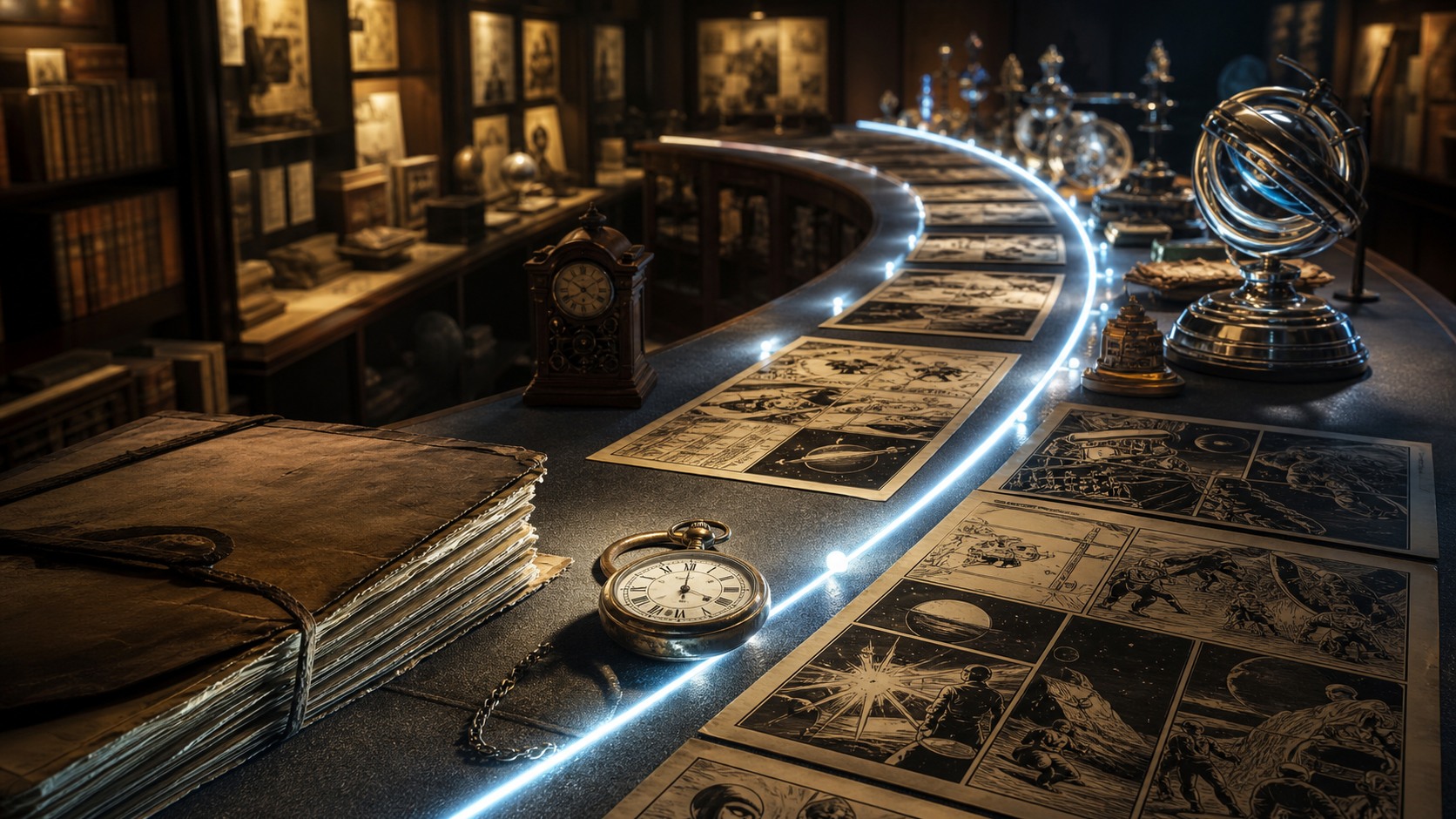
Why Alternate Timelines Are More Than What-If Games
The most fascinating alternate timelines in comics do not feel like throwaway detours. They feel like fully imagined worlds that grew from one different premise and then kept growing. A city changes its rituals, a hero becomes a warning instead of an inspiration, a villain's absence creates a worse vacuum, or a hopeful society reveals the hidden cost of peace. These timelines are fascinating because they make familiar mythology feel alive again, full of branches that could have carried their own histories.
A: A clear premise, believable consequences, and emotional pressure make a branch feel memorable.
A: No. Hopeful or orderly timelines can be just as interesting if they include tradeoffs.
A: Weak variants can be gimmicks, but strong ones reveal how circumstance shapes identity.
A: They combine familiar icons with bold changes that are easy to picture and discuss.
A: Yes, ideas from branches often influence later costumes, relationships, tones, or plots.
A: Look for the event or condition that made the world diverge.
A: Cities show the social consequences of changed history in a visual, immediate way.
A: No. They can still shape reader interpretation and character memory.
A: The premise has enough depth to support politics, culture, and new conflicts.
A: The best ones build a whole living world from the initial change.
A Fascinating Timeline Needs a Strong Premise
The best alternate timelines can usually be explained in one clear sentence, even when their details are rich. A war ended differently. A mentor survived. A public symbol was claimed by the wrong side. A miracle happened too early. That clean premise gives readers a handle, and then the worldbuilding gives the premise weight.
Without that center, alternate timelines can become decorative confusion. The reader sees strange costumes and altered names but cannot tell what the story is testing. A strong premise acts like gravity. It pulls every city design, relationship change, political shift, and character choice toward one meaningful question.
The Appeal of Familiar Worlds Made Strange
Alternate timelines work because readers recognize enough to feel the difference. If everything is new, the story becomes a separate fantasy world. If everything is the same, the branch has no reason to exist. The sweet spot is in between: a skyline that looks almost right, a team name used for a different purpose, a heroic symbol displayed in a place that makes readers uneasy.
That mixture of comfort and wrongness produces a special kind of attention. Readers inspect the page, looking for what survived and what mutated. The process feels participatory. The comic is not only telling a story; it is asking the audience to compare two versions of history and decide what the differences reveal.
This is why alternate timelines reward both new and longtime readers. A newcomer can enjoy the visible premise, while a veteran catches layered reversals of familiar moments.
Utopias With Cracks in the Paint
Some of the most interesting alternate timelines are not dark at first glance. They present safer cities, wiser rulers, or heroes who seem to have solved problems the main continuity never could. The fascination comes when the story asks what was traded away for that apparent success. Peace may depend on surveillance. Unity may depend on suppressed dissent. A world without one tragedy may have lost the compassion that tragedy created.
These timelines are powerful because they resist easy ranking. The main universe may look messier, but the beautiful branch may feel morally cramped. Readers are forced to ask whether safety without freedom, or order without honesty, deserves to be called better. That is a more interesting question than simply asking which version would win in a fight.
Nightmare Branches and Their Staying Power
Dark alternate timelines are common because they create instant stakes, but the memorable ones do more than pile up ruins. They explain how normal people adapted, compromised, resisted, or forgot. A nightmare world becomes believable when it contains routines. People still commute, whisper, trade, hide, celebrate, and raise families under altered rules.
That daily texture keeps the darkness from becoming empty spectacle. Readers see not only that the heroes failed, but how society reorganized around that failure. The world may be frightening, yet it feels historically coherent. That coherence is what makes the branch linger after the final page.
Alternate Timelines as Character Studies
A branch timeline can isolate one ingredient in a character's identity. What if the hero kept the powers but lost the family? What if the villain found community before bitterness hardened? What if the sidekick inherited responsibility too early? These questions let comics examine character construction with unusual precision.
The most fascinating variants are not simply opposite versions. They are plausible versions. Readers should be able to see the line from changed circumstance to changed behavior. That line may be painful, but it should not feel random. When it works, the alternate version teaches readers something about the original.
This is especially valuable for characters who have existed for decades. A timeline branch can strip away habit and show which traits are essential, which are learned, and which depend on the world offering the right challenge at the right time.
Cities That Tell the Timeline's Story
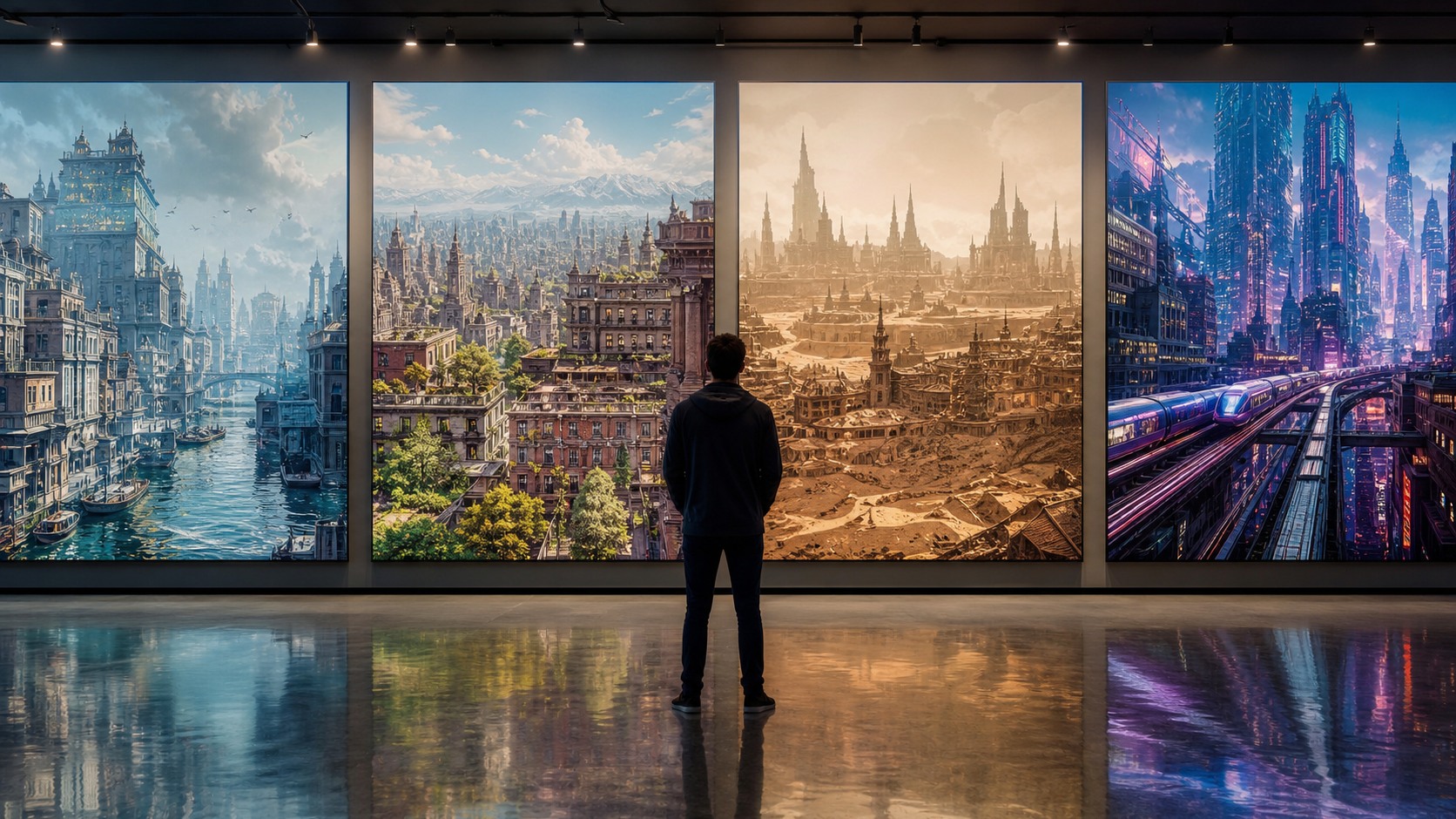
Comic book cities are often characters in their own right, so alternate timelines frequently announce themselves through geography. A familiar city may become fortified, flooded, rebuilt, emptied, overgrown, ceremonial, or divided into districts that reveal new power structures. The city tells readers what happened before dialogue catches up.
A changed city also lets the story widen beyond heroes and villains. Street art, monuments, transit, architecture, and public gatherings can show whether ordinary people remember the altered history with pride, fear, confusion, or exhaustion. These civic details make the timeline feel inhabited rather than staged.
Why Some Branches Deserve Return Visits
Certain alternate timelines invite sequels because their premise has room. The first story may explore the shock of difference, but later stories can explore politics, generations, faith, crime, art, education, and memory inside the branch. A great alternate timeline feels as if many untold stories are happening just outside the panel.
Return visits can deepen the world if they avoid explaining away all mystery. Part of the appeal is discovering new corners without flattening the original tension. The branch should remain strange enough to matter, but stable enough to support more than one plot.
The Collector and Fan Culture Effect
Alternate timelines often become fan favorites because they are easy to discuss visually. A distinctive version of a hero, a changed emblem, or a dramatic branch premise can travel quickly through covers, recommendations, adaptations, and debates. Fans remember the look before they remember every continuity detail.
This visual strength also affects collecting. Key issues tied to famous alternate timelines can become desirable because they represent a bold premise in a compact form. Readers may seek them out not only for rarity, but because the branch carries a strong identity. It stands apart on a shelf and in conversation.
How Alternate Timelines Influence Main Continuity
Even when an alternate timeline remains separate, it can influence the main universe. A variant relationship may inspire a later canon dynamic. A darker future may warn writers away from a stagnant path. A costume, tone, or supporting character can migrate back into the central mythology. Branches often function like laboratories.
This does not make them less authentic. In comics, experimentation is part of continuity's bloodstream. The main world survives partly because side worlds keep testing new possibilities. Sometimes the branch is temporary; sometimes it changes the imagination around the original permanently.
The Real Reason These Timelines Fascinate
Alternate timelines fascinate because they make destiny look negotiable. They show that heroes, villains, cities, and legacies are not single outcomes but arrangements of choice, accident, culture, and memory. A small difference can reveal the hidden machinery of an entire universe.
That is why readers keep returning to these branches even when they know the main continuity will continue. Alternate timelines create a kind of narrative double vision. We see what is, what might have been, and what the original world must keep choosing if it wants to remain itself.
How Fan Culture Keeps Branches Alive
Fascinating alternate timelines often live longer than their original page count because fans keep using them as reference points. A branch can become shorthand for a mood, a moral possibility, or a design approach. Readers mention it when discussing what a character could become under different pressure. Artists return to its visual language. Adaptations borrow its premise because the contrast is immediate.
This afterlife matters. A timeline does not need to replace the central continuity to influence the culture around it. Sometimes its job is to remain nearby as an unrealized possibility, reminding readers that the main version is not the only imaginable version. That kind of pressure can make the original feel richer.
Fan attachment also reveals whether the world felt complete. People rarely argue passionately for a branch that only had a costume gimmick. They argue for branches that seemed to contain politics, grief, humor, danger, and ordinary life beyond the panels shown.
Why the Best Branches Resist Simple Ranking
It is tempting to rank alternate timelines by asking which one is best, darkest, safest, or most powerful. The stronger question is what each branch understands. One timeline may understand grief. Another may understand empire. Another may understand the loneliness of public symbols. Treating them as arguments rather than scorecards makes the reading experience more generous.
This is why the most fascinating branches can disagree with each other. A hopeful timeline may expose the limits of a nightmare future, while a darker branch may reveal the naivete of an easy utopia. Together, they turn comic continuity into a conversation. The reader is not simply choosing a favorite world; the reader is studying what each world believes.
The Difference Between Novelty and Depth
Novelty asks readers to notice that something is different. Depth asks readers to care that it is different. An alternate timeline reaches depth when the change affects relationships, institutions, memory, and daily life. The branch begins to feel like a world with history instead of a sketch built for one twist.
That difference is why some alternate timelines vanish after their reveal while others remain part of fan vocabulary. The memorable ones have consequences that can be imagined beyond the plot. Readers can picture what school, crime, worship, work, love, or mourning might look like there. That imaginative continuation is the sign of a branch that worked.
When a Branch Makes the Original Better
A fascinating alternate timeline can make the main continuity feel stronger by contrast. After seeing a colder version of a hero, readers may notice the warmth in the original. After visiting a world where a city surrendered its freedom for safety, the messy resilience of the standard city can feel newly admirable. The branch changes how the familiar world is read.
This is one of the format's quietest strengths. It does not only add more material; it teaches attention. Readers return from the branch with sharper eyes for the relationships, institutions, and choices that keep the main universe from becoming its darker cousin. Even a temporary timeline can permanently improve the reader's sense of what is at stake.
That is why alternate timelines are often most powerful when they do not try to replace the original. Their job is to illuminate it from an impossible angle.
A branch can also make readers more patient with imperfection. The main continuity may look chaotic, compromised, or crowded, but the alternate version can reveal why that mess contains necessary freedoms. Fascinating timelines do not simply offer escape. They teach readers how to value the world they return to.
That returning glance is where many branch stories earn their lasting power.
They make the familiar feel chosen again.