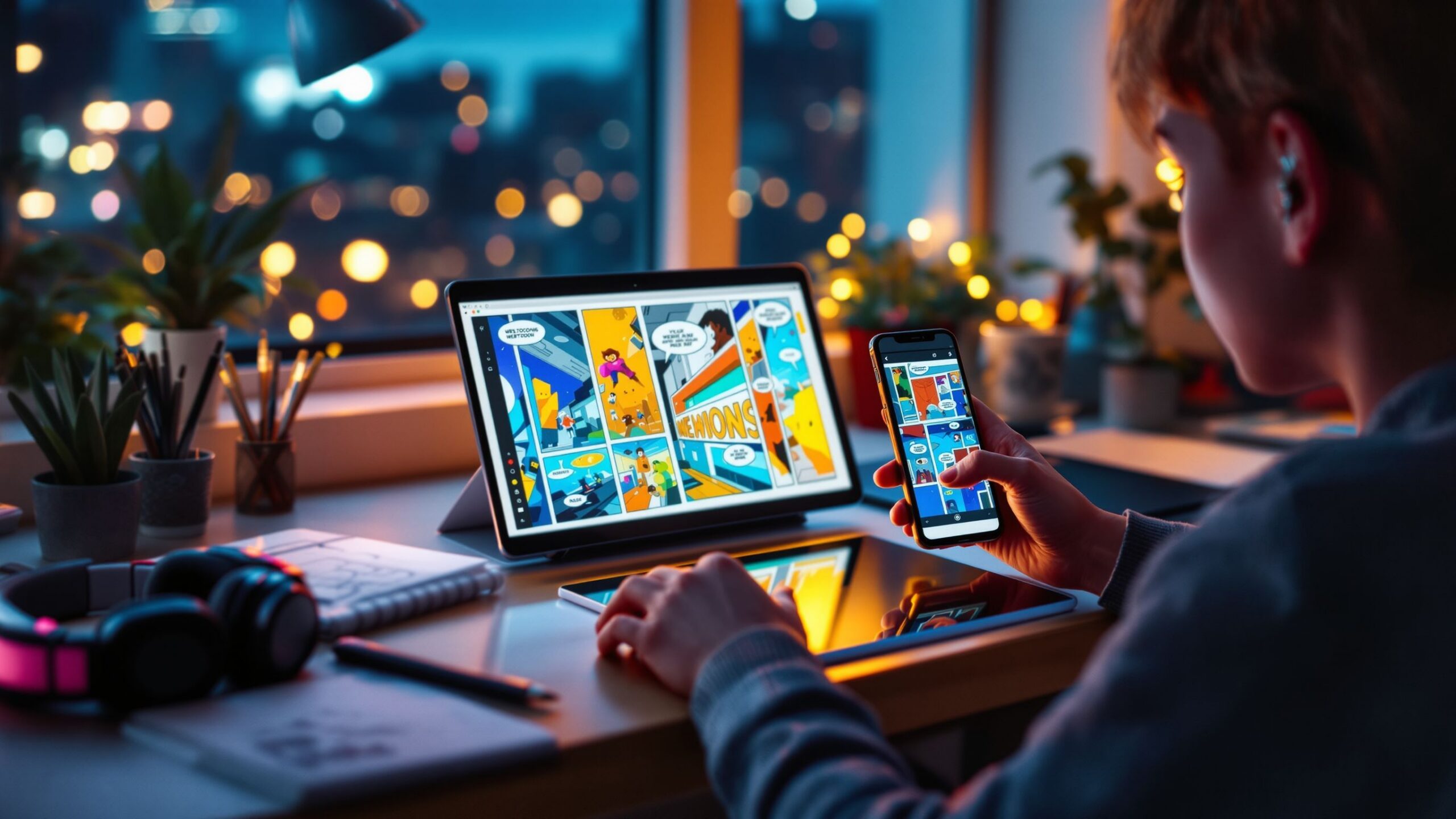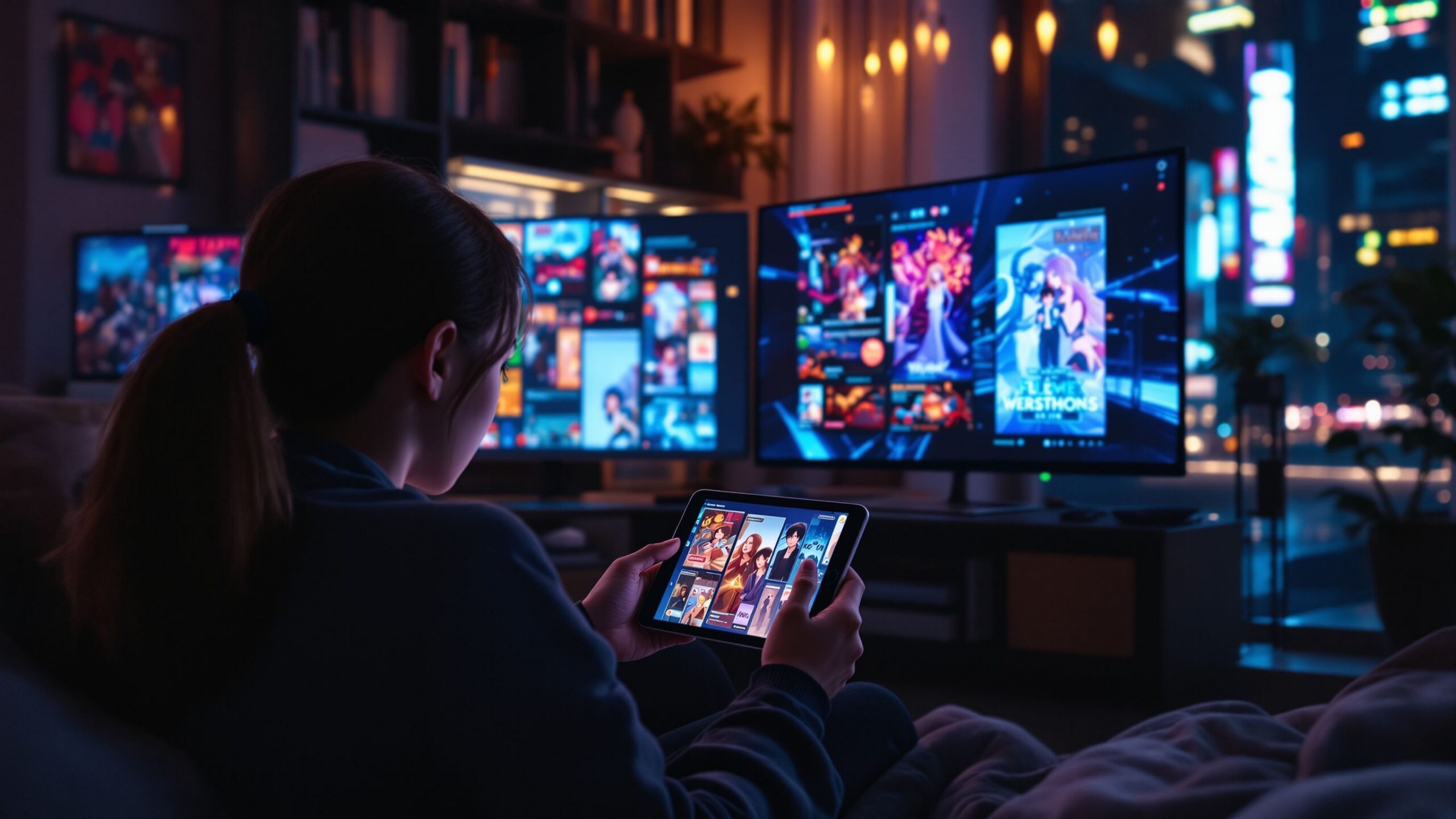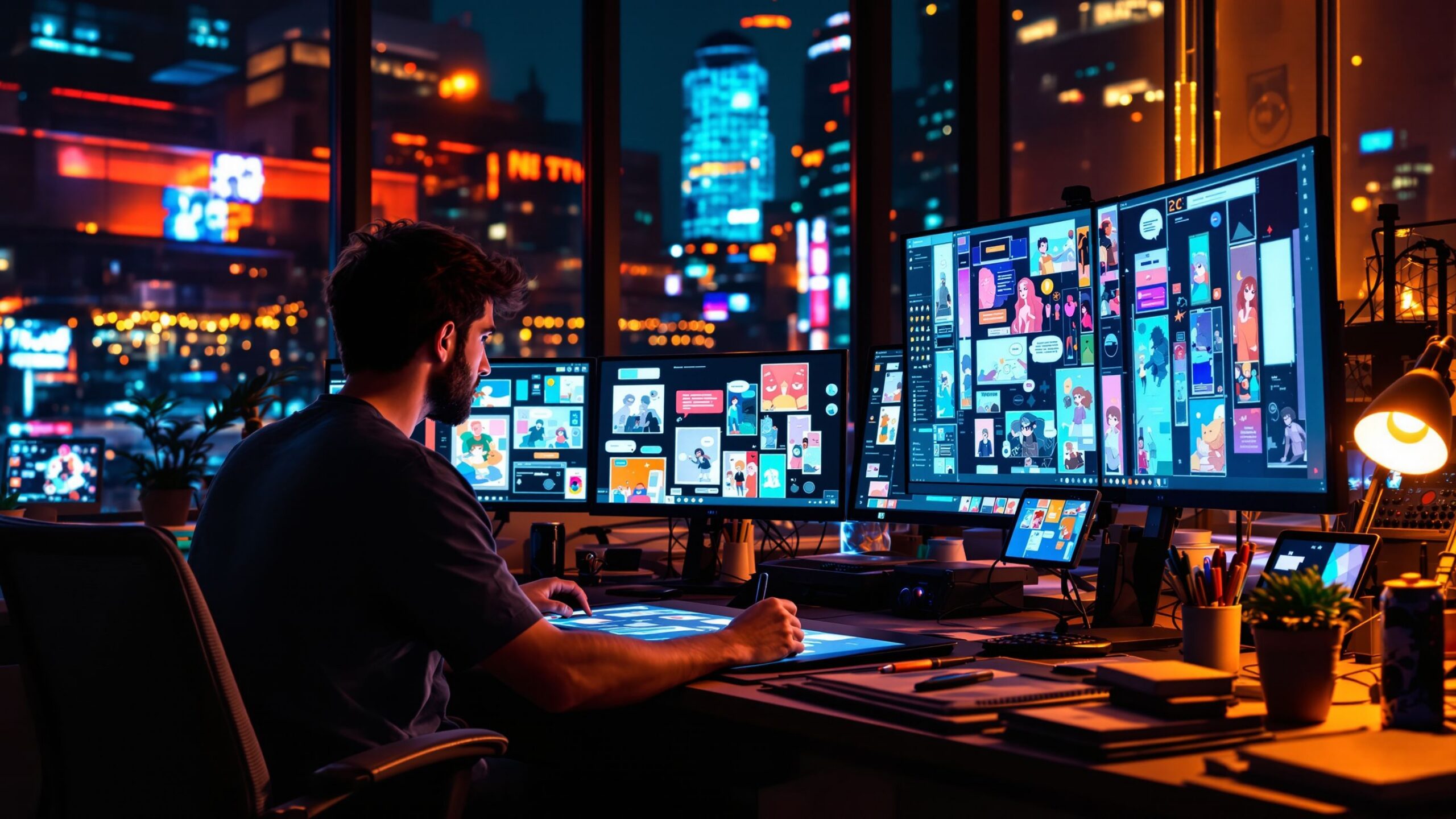
The comic industry has entered a transformative era, one defined not by the texture of paper or the smell of ink, but by the glow of screens and the swipe of a finger. Webtoons, a digital-first format designed specifically for mobile consumption, have reimagined what comics can be in a world increasingly shaped by technology. Stories that once lived on printed pages are now unfolding in endless vertical scrolls, inviting readers into immersive experiences that feel fluid, immediate, and deeply personal. This evolution reflects a broader cultural shift. As audiences spend more time on their phones, entertainment has adapted to meet them there. Webtoons are not simply comics transferred to a digital format—they are built for the digital environment from the ground up. Their structure, pacing, and visual rhythm are tailored to the way people naturally interact with screens, making them one of the most accessible and engaging storytelling mediums of the modern era.
A: They are optimized for digital reading with vertical scrolling and full color.
A: Most are free with optional paid early-access episodes.
A: Yes, many platforms allow independent creators to publish.
A: Through ads, premium content, sponsorships, and adaptations.
A: Romance, fantasy, and action dominate the charts.
A: Yes, many are adapted into dramas and animated series.
A: Smartphones, tablets, and desktops all support webtoon platforms.
A: Typically weekly, depending on the creator.
A: Yes, they reach audiences worldwide through translations.
A: Episodic storytelling, cliffhangers, and easy access keep readers hooked.
The Origins of Webtoons
The rise of webtoons can be traced back to South Korea in the early 2000s, a period marked by rapid technological advancement and widespread internet adoption. During this time, traditional comic publishing was facing challenges, including declining sales and shifting consumer habits. Digital platforms emerged as a solution, offering creators a way to bypass traditional gatekeepers and reach audiences directly.
Early webtoons were modest in both scope and design. Many were simple black-and-white strips, uploaded regularly to online portals. However, as bandwidth improved and digital tools became more sophisticated, artists began experimenting with color, layout, and narrative structure. What started as a practical adaptation quickly evolved into a distinct art form, one that embraced the possibilities of digital storytelling rather than imitating print.
The Vertical Scroll Revolution
One of the most defining features of webtoons is their vertical scrolling format. Unlike traditional comics, which are organized into fixed pages, webtoons are presented as continuous vertical narratives. This design aligns perfectly with how users interact with smartphones, allowing stories to unfold naturally as readers scroll.
This format has profound implications for storytelling. Creators can control pacing with remarkable precision, using spacing and timing to build tension, emphasize emotion, or deliver dramatic reveals. A long stretch of blank space can heighten anticipation, while a rapid sequence of panels can convey urgency and action. The result is a reading experience that feels closer to watching a film than flipping through a book, blending visual storytelling with a sense of motion and rhythm.
Accessibility and Global Reach
One of the most significant impacts of webtoons is their ability to reach a global audience with unprecedented ease. Traditional comics often require physical distribution or specialized retail channels, which can limit accessibility. Webtoons, by contrast, are available to anyone with an internet connection, removing many of the barriers that once restricted the medium.
This accessibility has expanded the audience for comics in ways that were previously unimaginable. Readers who may never have considered picking up a comic book are now discovering stories through apps and websites, often stumbling upon them through recommendations or social media. The result is a more diverse and engaged readership, one that spans cultures, languages, and age groups.
Translation and localization have further amplified this reach. Stories created in one part of the world can quickly find audiences in another, fostering a global exchange of ideas and artistic styles. This cross-cultural interaction enriches the medium, introducing readers to new perspectives and storytelling traditions.
Empowering Creators
Webtoons have fundamentally changed the power dynamics of the comic industry by giving creators more control over their work. In the traditional model, artists often rely on publishers to handle distribution, marketing, and monetization. While this system provides structure, it can also limit creative freedom and access to opportunities.
Digital platforms have disrupted this model by allowing creators to publish directly to a global audience. This democratization of content creation has opened the door for a wider range of voices, including those who may have been overlooked by traditional publishers. Independent artists can experiment with different genres, styles, and narratives, building loyal fanbases without needing institutional backing.
The direct connection between creators and readers also fosters a sense of community. Feedback can be immediate, with comments, ratings, and social media interactions shaping the evolution of a story. This dynamic relationship creates a collaborative environment where storytelling becomes an ongoing dialogue rather than a one-sided process.
Diverse Genres and Expanding Representation
The flexibility of the webtoon format has led to an explosion of genres and storytelling approaches. While traditional comics have often been associated with specific categories, such as superheroes or fantasy, webtoons encompass a much broader spectrum. Romance, horror, drama, science fiction, slice-of-life, and even educational content all thrive within the webtoon ecosystem.
This diversity extends beyond genre to include representation. Webtoons frequently explore themes of identity, culture, and personal experience, offering stories that resonate with a wide range of audiences. Characters are more varied, narratives are more inclusive, and perspectives are more nuanced. This shift reflects a growing demand for stories that reflect the complexity of the real world, rather than adhering to narrow conventions.
From Digital Pages to Global Screens
The influence of webtoons has expanded beyond the realm of comics, reaching into other areas of entertainment. Many popular series have been adapted into television shows, films, and even games, demonstrating the storytelling potential of the medium. These adaptations bring webtoon narratives to new audiences, often achieving significant commercial and critical success.
This cross-media expansion highlights the versatility of webtoon storytelling. The format’s emphasis on strong visuals and compelling narratives makes it well-suited for adaptation, bridging the gap between comics and other forms of media. As a result, webtoons are increasingly seen not just as a standalone medium, but as a source of intellectual property for the broader entertainment industry.
Monetization and the Digital Economy
The business model behind webtoons reflects the flexibility and innovation of the digital age. Many platforms operate on a freemium model, offering basic access to content at no cost while charging for premium features such as early access or exclusive episodes. This approach allows readers to explore a wide range of stories before committing financially, lowering the barrier to entry.
For creators, this model provides multiple revenue streams. Advertising, subscriptions, merchandise, and fan support all contribute to a sustainable ecosystem that rewards creativity and engagement. While the financial landscape can be competitive, the opportunities for success are more accessible than ever before, particularly for those who can build and maintain a dedicated audience.
Challenges in a Rapidly Evolving Industry
Despite their many advantages, webtoons are not without challenges. The ease of entry into the market has led to increased competition, making it difficult for new creators to stand out. The demand for consistent updates can also place significant pressure on artists, leading to concerns about workload and burnout.
Additionally, questions about fair compensation and intellectual property rights remain important issues within the industry. As webtoons continue to grow, platforms and creators alike must navigate these challenges to ensure a sustainable and equitable future.
The Future of Digital Comics
The future of webtoons is closely tied to ongoing technological advancements. Innovations in animation, sound integration, and interactive storytelling are already beginning to shape the next generation of digital comics. These developments have the potential to blur the boundaries between comics, games, and film, creating entirely new forms of entertainment.
As audiences continue to embrace digital media, webtoons are likely to play an increasingly central role in the global storytelling landscape. Their adaptability, accessibility, and creative potential position them as a driving force in the evolution of comics and beyond.
The rise of webtoons marks a turning point in the history of comics, one that reflects the broader transformation of media in the digital age. By embracing new technologies and redefining traditional conventions, webtoons have expanded the possibilities of storytelling, making it more accessible, inclusive, and dynamic than ever before.
As the industry continues to evolve, webtoons stand as a testament to the power of innovation and creativity. They are not just changing how stories are told—they are reshaping who gets to tell them and how those stories are experienced around the world.